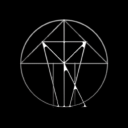
This is a matter of visualizing the scenario and it pretty much explains itself.
Let’s start with two random shaped plates with jagged edges. Place them together so that they touch. Now place a finger on a random place on each plate, and push in a random direction generally towards the other plate.
Whichever parts touch first are going to have the greatest pressure. If that part breaks, crumbles, or gets pushed out of the way somehow you get an earthquake.
Now in real life, we don’t really know what the edges of these plates look like. And there are a lot of huge pieces of plate rubble between them. The plates are anywhere from 5 to 30 miles thick and of varying strength. The things we call fault lines are either the surface eruption or an approximation of the center between the two plates. the movement of each plate is fairly easy to determine, but meaningful edges are much harder. Also, the forces behind the movement slowly change over time just to through an additional wrinkle into the mix.
We have reason to believe that we will eventually be able to predict these things but we still have a long ways before we developed tools to get the information we need first.
 MKDesign